


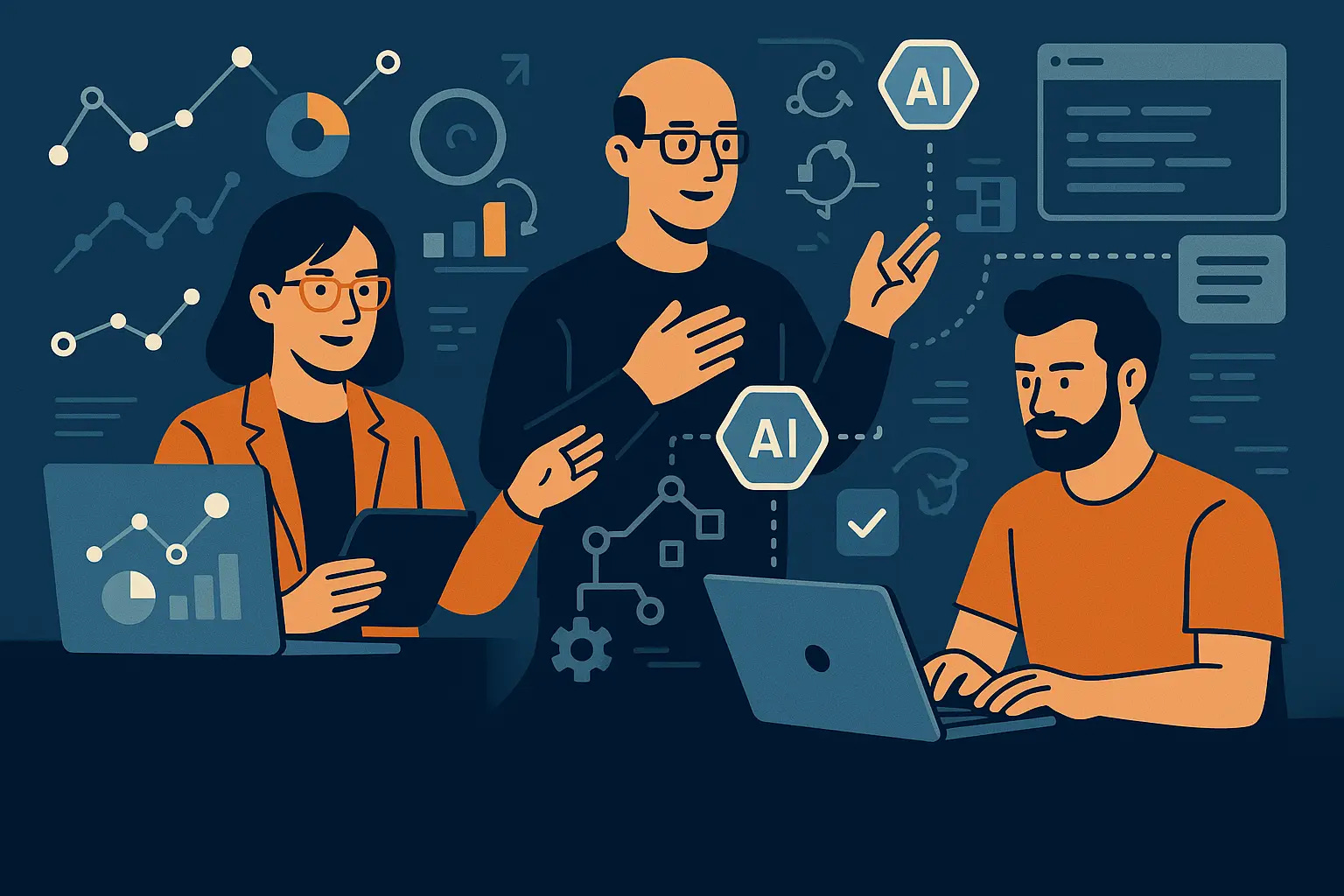
In 2025, Scrum roles have expanded far beyond traditional responsibilities. Product Owners are now strategic leaders who make data-backed decisions, validate customer needs continuously, and connect backlog priorities directly to business outcomes. Scrum Masters act as organizational change agents who coach teams, remove systemic blockers, and improve flow—not just run ceremonies. Developers have also shifted from pure coding roles to AI-augmented, cross-functional contributors who handle quality, deployment, and business understanding.
AI tools have become deeply integrated into Agile workflows. Teams now use AI for user-story refinement, sprint forecasting, code generation, automated testing, and detecting delivery patterns. This means every Scrum role requires new skills: Product Owners need data literacy and strategic thinking; Scrum Masters must master facilitation, systems thinking, and DevOps awareness; Developers must be comfortable with AI-assisted development, T-shaped skills, and close collaboration across disciplines. These changes reflect a broader shift toward outcome-driven agility—where value delivered, customer impact, and lead time matter more than rituals or velocity. Scrum is not becoming obsolete; it is becoming more advanced and more aligned with real business outcomes. Teams that embrace AI, cross-functionality, and product thinking will perform faster and smarter in 2025 and beyond.